

Navigating the World of Professional Wealth Management
Discover how a financial management advisor protects your wealth. Learn FMA requirements, CFP differences, and tips for high earners.

A financial management advisor is a credentialed professional who helps clients plan, grow, and protect their wealth through structured, personalized financial strategies.
Here is a quick overview of what you need to know:
| Topic | Key Facts |
|---|---|
| What is an FMA? | A professional designation awarded by the Canadian Securities Institute (CSI) |
| Who holds it? | Over 3,000 professionals across Canada |
| Core services | Retirement planning, investment guidance, tax strategy, estate planning |
| Who is it for? | Individuals and families at various stages of wealth building |
| Quebec recognition | The FMA designation is not recognized in Quebec |
| Key difference from CFP | No vocational experience required to earn the FMA |
Most people don't think about their finances until something forces them to. A market drop. A major life event. A tax bill that feels too big.
By then, the decisions that could have made the biggest difference have already passed.
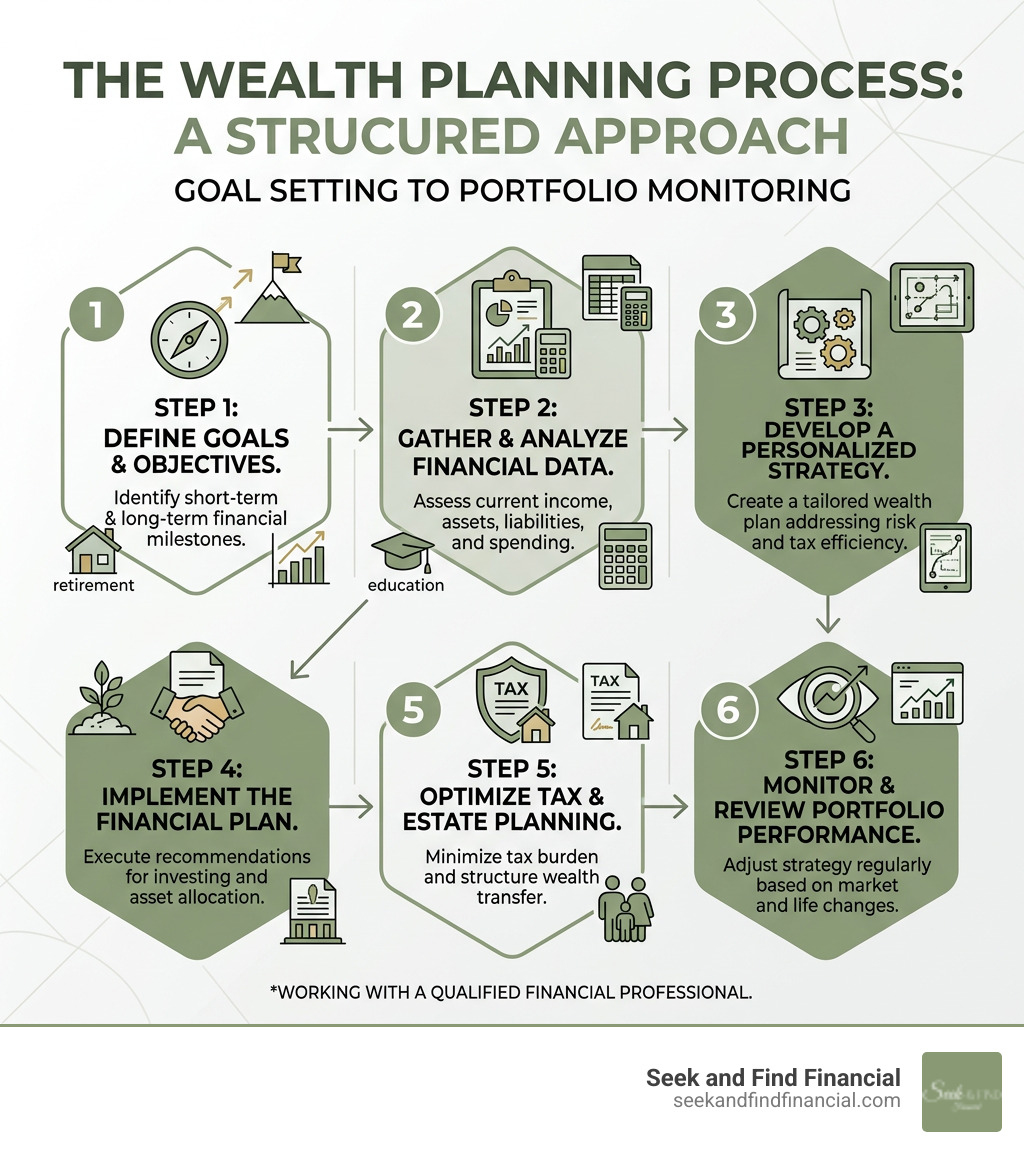
That is the problem with reactive financial planning. The families and business owners who build lasting wealth don't wait for a crisis. They work with qualified professionals who help them build a clear, structured plan before problems arise.
But with so many titles, designations, and credentials in the financial industry, it can be hard to know who actually has the training to help you, and what they are qualified to do.
This guide breaks it down clearly, starting with one designation that often gets overlooked: the Financial Management Advisor (FMA).
I'm Daniel Delaney, Founder of Seek & Find Financial, and my career advising clients on wealth strategy, portfolio management, and retirement planning, first within established institutions and now independently, has given me a clear view of what separates good financial management from great financial management advisory. In the sections ahead, I'll walk you through what the FMA designation means, how it compares to other credentials, and what it all means for your financial future.
Investing involves risk, including possible loss of principal. No investment strategy can ensure financial success or guarantee against losses. Past performance may not be used to predict future results. Provided content is for overview and informational purposes only, reflect the opinions of the author, and is not intended and should not be relied upon as individualized tax, legal, fiduciary, or investment advice.
This information is being provided only as a general source of information. These views may change as market or other conditions change. This information is not intended and should not be used to provide financial advice and does not address or account for an individual's circumstances. Past performance does not guarantee future results and no forecast should be considered a guarantee. Please seek the guidance of a financial professional regarding your particular financial concerns.
Investment advisory services offered by duly registered individuals through Seek & Find Financial LLC a Registered Investment Adviser. Licensed Insurance Professional.
The financial management advisor (FMA) is a professional designation held by over three thousand people in Canada. It is awarded by the Canadian Securities Institute (CSI). This institute is a main educator for the Canadian securities industry.
When you see someone with the FMA title, it means they have completed a specific set of advanced courses. These courses focus on wealth management and financial planning. The goal of an FMA is to help clients with complex financial needs. They look at the whole picture of a person's life. This includes their goals, their family, and their future.
While this designation is popular in most of Canada, it is important to note that it is not recognized in the province of Quebec. For those in our local areas like Merrillville or Chicago, understanding these different titles helps you see how the industry organizes its experts. Even though the FMA is a Canadian title, the skills it covers are universal. These skills include things like asset allocation and understanding SIPC protection for investments.
Earning the FMA is not a simple task. It requires passing three major courses. Each course has its own proctored exam.

The first step is the Canadian Securities Course (CSC®). This course teaches how capital markets work. It covers different types of securities and how to build relationships with clients. It is the foundation for anyone working in the investment world.
The second step is the Professional Financial Planning Course (PFPC). This is where things get more detailed. Students learn about budgeting, tax planning, and retirement. They also study estate planning. Completing this course allows a person to advise clients with a net worth up to $300,000.
The final step is the Wealth Management Techniques Course (WMTC). This is the most advanced part. It focuses on high net worth clients. It teaches how to understand a client's deep financial needs. It also covers asset allocation and products for wealthy individuals.
To get the FMA, a student must have a 60 percent average across these courses. There is no work experience requirement to get the title. This makes it different from some other certificates. However, the exams are strict and monitored closely by the CSI.
Many people ask how the FMA differs from the Certified Financial Planner (CFP) designation. Both are respected, but they serve different paths.
| Feature | FMA Designation | CFP Designation |
|---|---|---|
| Awarding Body | Canadian Securities Institute (CSI) | FP Canada / Various |
| Experience Needed | None required for the title | 3 years of vocational experience |
| Focus | Advanced wealth management | Comprehensive financial planning |
| Education Path | CSC, PFPC, and WMTC | Specific degree and capstone courses |
| Client Level | Often used for high net worth | Broad range of all clients |
The biggest difference is the experience requirement. You can earn an FMA just by passing the exams. To be a CFP, you must have three years of real work experience in the field.
The FMA is often seen as a stepping stone. For example, completing the PFPC (part of the FMA path) qualifies a person to take the CFP exam. It also provides credits toward an MBA at some universities. While an FMA can handle high net worth clients, the CFP is the global standard for general financial planning.
Managing money is about more than just picking stocks. It is about protection. A financial management advisor uses their training to build a shield around your assets.
One way they do this is through risk management. They look at what could go wrong and plan for it. This includes having the right insurance and a solid estate plan. They also stay up to date on registration rules. In the investment world, providing specific advice on buying or selling stocks usually requires additional registration with the government. A general counselor can give advice on budgeting, but they cannot trade for you unless they are registered.
A professional advisor offers a wide range of services. They don't just look at your bank account. They look at your life.
If you are looking for help, you should start by using your network. Ask friends or family who they trust. But don't stop there. You must do your own due diligence.
You can use online directories to find experts in your area. Many websites allow you to use search filters. You can filter by things like the advisor's education, their specialty, or even the languages they speak. Always check their credentials. You can verify a designation like the FMA through the CSI website. This ensures the person is in good standing and has not had their title revoked for misconduct.
At Seek & Find Financial, we know that generic advice does not work for everyone. If you are an entrepreneur or a business owner earning $400K or more, your needs are different. You have more complexity. You have more to lose.
We focus on personalized growth. We don't use old, dusty models. We use modern technology like Altruist to give you a clear view of your money in real time. Our goal is to create a real-life strategy that fits your actual life. This is not about a 9-to-5 grind until you are 65. It is about building optionality. We want you to have the freedom to make choices now, not just thirty years from today.
We serve clients across Indiana and Illinois, including Valparaiso, Crown Point, and Chicago. We believe that the most important financial decisions often happen in your 30s and 40s. This is when life is moving fast. You might be buying a home, starting a business, or growing a family. Having a structured plan during these years prevents costly mistakes.
The FMA is recognized in almost all of Canada. However, it is not recognized in Quebec. The Canadian Securities Institute sets the standards for the designation, but each province has its own rules for who can call themselves a financial advisor.
Yes. Holding the FMA designation proves you have the knowledge, but it does not give you the legal right to sell securities. To give specific investment advice or trade stocks for clients, an advisor must be registered with the appropriate provincial or state regulators. General financial counseling does not always require this, but investment management does.
FMAs are trained to handle a wide range of clients. Those who have finished the PFPC course are qualified to work with mid-range investors. Those who complete the full WMTC course are specifically trained for high net worth individuals. This often means clients with over $300,000 in investable assets.
Building wealth is a long-term strategy. It is not something that happens by accident. It requires financial clarity and a structured plan. Whether you are looking for a financial management advisor or a firm that understands the unique needs of high-earning business owners, the key is to start now.
Don't wait for the next market drop to wonder if you are prepared. Take the time to understand your options and find a partner who puts your life and your values first. To learn more about how we help our clients navigate these choices, you can read more about What we do.
Investing involves risk, including possible loss of principal. No investment strategy can ensure financial success or guarantee against losses. Past performance may not be used to predict future results. Provided content is for overview and informational purposes only, reflect the opinions of the author, and is not intended and should not be relied upon as individualized tax, legal, fiduciary, or investment advice.
This information is being provided only as a general source of information. These views may change as market or other conditions change. This information is not intended and should not be used to provide financial advice and does not address or account for an individual’s circumstances. Past performance does not guarantee future results and no forecast should be considered a guarantee. Please seek the guidance of a financial professional regarding your particular financial concerns.
Investment advisory services offered by duly registered individuals through Seek & find Financial LLC a Registered Investment Adviser. Licensed Insurance Professional