

Who’s Running the Show? 401k Plan Sponsor vs Plan Administrator
Clarify 401k plan administrator duties vs sponsor responsibilities and cut compliance risks with clear fiduciary guidance.
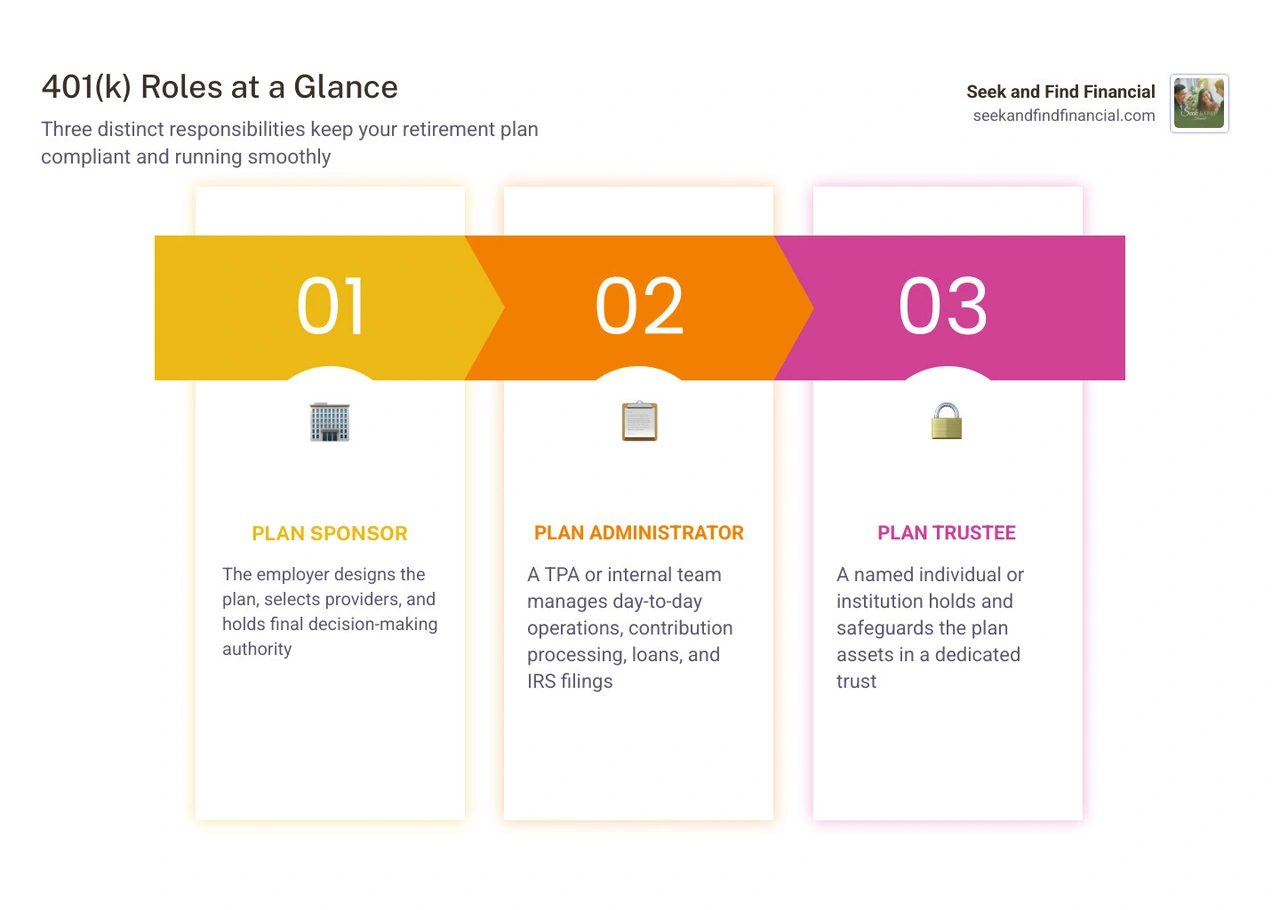
A 401(k) plan administrator is the organization or individual responsible for the day-to-day management of your company's retirement plan. If you're a business owner trying to figure out who does what, here's the short answer:
| Role | Who It Is | What They Do |
|---|---|---|
| Plan Sponsor | The employer (you) | Sets up the plan, makes design decisions |
| Plan Administrator | Often a third-party firm (TPA) | Runs daily operations, handles compliance |
| Plan Trustee | Named individual or institution | Holds and protects plan assets |
These roles are distinct. Confusing them is one of the most common mistakes employers make, and it can create real legal and compliance risk.
Many business owners assume their financial advisor or payroll company is handling everything. Often, they're not. The plan administrator handles the operational and compliance work: processing contributions, approving loans, filing with the IRS, and making sure participants have the information they need.
I'm Daniel Delaney, founder of Seek & Find Financial. My career in financial services, from Riverstone Financial Advisors through Brightway Wealth Management, gave me hands-on experience helping business owners navigate retirement plan structures, including understanding exactly what a 401(k) plan administrator is responsible for and how that affects your liability. That background shapes everything I'll walk you through in this guide.
Investing involves risk, including possible loss of principal. No investment strategy can ensure financial success or guarantee against losses. Past performance may not be used to predict future results. Provided content is for overview and informational purposes only, reflect the opinions of the author, and is not intended and should not be relied upon as individualized tax, legal, fiduciary, or investment advice.
This information is being provided only as a general source of information. These views may change as market or other conditions change. This information is not intended and should not be used to provide financial advice and does not address or account for an individual's circumstances. Past performance does not guarantee future results and no forecast should be considered a guarantee. Please seek the guidance of a financial professional regarding your particular financial concerns.
Investment advisory services offered by duly registered individuals through Seek & Find Financial LLC a Registered Investment Adviser. Licensed Insurance Professional.
When we talk about a 401(k) plan administrator, we are talking about the engine room of your retirement plan. This role is usually held by a specialized organization that makes sure the plan stays within the lines drawn by the IRS and the Department of Labor. They are the primary liaison between your company and your employees when it comes to retirement savings.
Many of our clients in Valparaiso and Crown Point start by thinking a 401(k) is just a bucket where money goes. In reality, it is a complex legal entity. The administrator manages the day-to-day operations to keep that entity healthy. This includes keeping track of every penny that enters or leaves the plan, which is known as recordkeeping.
They also provide participant support. If an employee has a question about their investment options or needs help with paperwork, the administrator is usually the one who answers the call. This is vital because 60% of employees today consider a retirement plan a "must-have" benefit. Without a solid administrator, that "must-have" benefit can quickly become a source of frustration for your team.
You can learn more about how these roles fit into a larger business strategy in our Business Owner Financial Planning Guide. For larger organizations, specialized Defined Contribution Plan Administration | Milliman | Worldwide services can help manage the high volume of data and complex compliance needs.
The duties of a 401(k) plan administrator are highly technical. They don't just "watch" the money; they move it and report on it. Here are the primary tasks they handle:
It is very common for business owners to use the terms "sponsor" and "administrator" as if they mean the same thing. They do not.
The Plan Sponsor is the employer. That is you. As the sponsor, you are the one who decides to offer the plan. You decide how much the company will match and which employees are eligible to join. You have the ultimate power to hire or fire the other professionals involved in the plan.
The 401(k) plan administrator is the party hired to run the plan. In many cases, this is a Third-Party Administrator (TPA). While you as the sponsor set the rules, the administrator follows them.
For example, if you decide that employees must work for one year before they can join the plan, that is a "plan design" decision made by the sponsor. The administrator then makes sure no one is allowed into the system until they have hit that one-year mark.
We often help our clients choose between different types of plans, such as Safe Harbor or SIMPLE 401(k)s. You can explore these options in our guide on Retirement Savings Plans for Small Business Owners.
One of the most important parts of setting up a 401(k) is creating the "written plan document." The IRS requires every plan to have one. This document is like the constitution of your retirement plan. It outlines every rule, from who can participate to how the money is invested.
The 401(k) plan administrator helps ensure this document is followed exactly. They also help arrange the trust fund. By law, 401(k) assets must be held in a trust to protect them from the company's creditors. This ensures that even if your business faces hard times in Merrillville or Hobart, your employees' retirement savings remain safe.
In retirement plans, "fiduciary" is a heavy word. It means you are legally required to act in the best interest of the plan participants. Both the sponsor and the administrator have fiduciary duties, but they can delegate some of that responsibility.
Many employers choose to hire a "3(16) Administrator." This is a specific type of 401(k) plan administrator that takes on the legal liability for the plan's administration. If a mistake is made on a filing or a notice isn't sent out on time, the 3(16) fiduciary is the one on the hook, not the business owner.
There is also the "3(38) Investment Manager." While the administrator handles the paperwork, the 3(38) manager handles the actual investment choices. This is a great way for busy entrepreneurs to offload the risk of picking the "wrong" mutual funds for the plan.
Outsourcing these roles can reduce your fiduciary risk by up to 98%. You can find more details on how this works through Independent Fiduciary Services & ERISA Compliance | Admin316 . Managing these risks is a key part of an overall Tax Strategy for Business Owners, as compliance errors can lead to costly penalties.
The risks of running a 401(k) are real. The Department of Labor and the IRS are very strict about how these plans are managed. Common risks include:
A professional 401(k) plan administrator monitors these risks daily. They perform compliance testing to ensure the plan stays "qualified," which keeps the tax benefits in place for everyone.
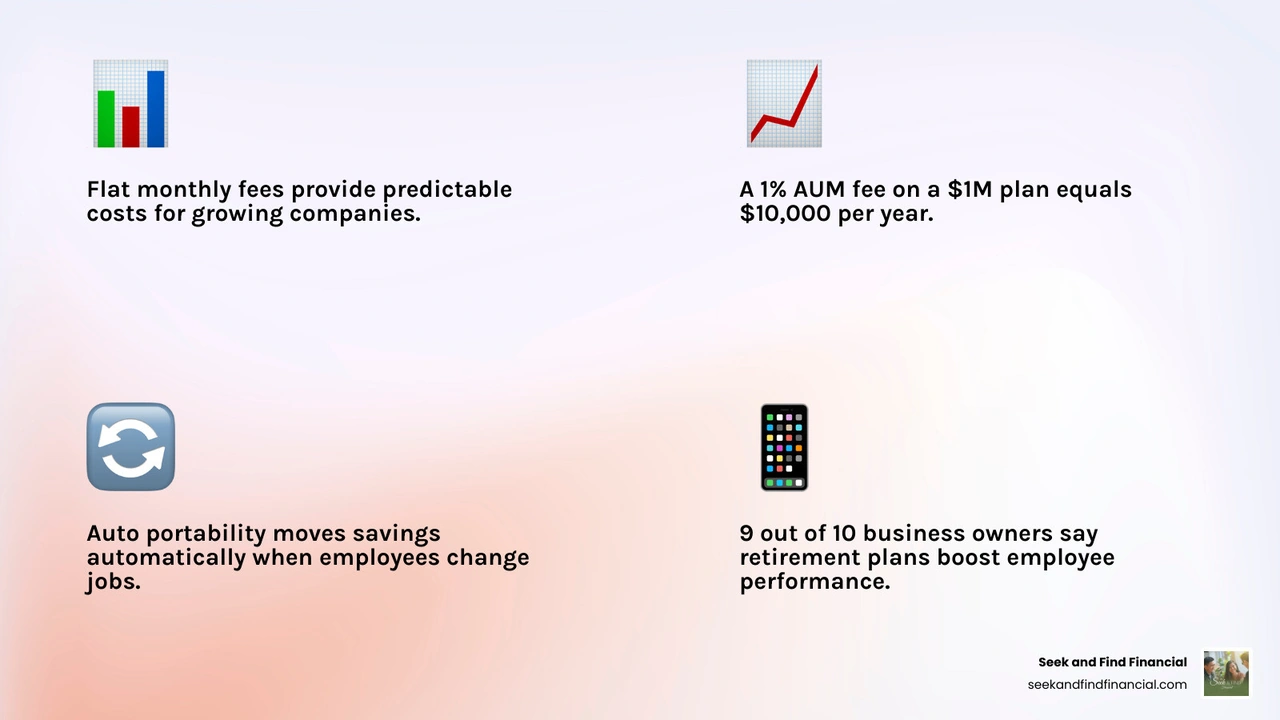
One of the most surprising statistics in our industry is that only 27% of people know what they pay in 401(k) fees. For a business owner, high fees can eat away at your own retirement savings and those of your employees.

When you are looking for a 401(k) plan administrator, you will usually see two types of fees:
We recommend looking for administrators who offer transparent pricing and modern technology. You want a platform that integrates with your payroll software to reduce manual data entry. This lowers the chance of human error.
For more tips on what to look for, check out 10 Things to Look for in Retirement Plan Administration . We also cover fee structures in our Retirement Planning Entrepreneurs Guide.
Technology has changed 401(k) administration for the better. We are seeing a rise in "auto portability." This is a service where an employee's 401(k) balance automatically follows them to their new job when they leave your company. This prevents "orphan" accounts and keeps retirement savings consolidated.
Modern administrators also offer AI-powered support and mobile apps. These tools allow your employees in Portage or Hebron to track their savings progress in real time. When employees can see their wealth growing, they are more likely to stay engaged and productive. In fact, 9 out of 10 business owners say offering a retirement plan positively impacts employee attitude and performance.
If you are an employee, the easiest way to find your 401(k) plan administrator is to look at your Summary Plan Description (SPD). This is a document your employer is required to give you. You can also look at your most recent account statement or check your company's Form 5500 filing on the Department of Labor website.
Auto portability is a relatively new feature where your retirement savings are automatically moved from your old employer's plan to your new employer's plan. This helps prevent people from cashing out their accounts when they change jobs, which can lead to taxes and penalties.
Business owners offer these plans because they provide a competitive edge. In a tight labor market like Northwest Indiana or Chicago, a high-quality 401(k) can be the deciding factor for a top-tier candidate. It also provides significant tax advantages for the business owner, especially for those in high-income brackets.
Choosing the right 401(k) plan administrator is about more than just checking a box. It is about protecting your business from liability and providing a valuable future for your employees. Whether you are operating in Valparaiso, Crown Point, or Chicago, the complexity of these plans requires a structured, long-term strategy.
At Seek & Find Financial, we specialize in helping entrepreneurs and high earners build wealth through personalized, technology-driven planning. We don't believe in generic advice. We believe in clarity and discipline. By understanding the roles of sponsors and administrators, you can take control of your company's financial health and focus on what you do best: growing your business.
If you are ready to move past the confusion and build a retirement strategy that actually works for you, we invite you to learn More info about our services.
Investing involves risk, including possible loss of principal. No investment strategy can ensure financial success or guarantee against losses. Past performance may not be used to predict future results. Provided content is for overview and informational purposes only, reflect the opinions of the author, and is not intended and should not be relied upon as individualized tax, legal, fiduciary, or investment advice.
This information is being provided only as a general source of information. These views may change as market or other conditions change. This information is not intended and should not be used to provide financial advice and does not address or account for an individual’s circumstances. Past performance does not guarantee future results and no forecast should be considered a guarantee. Please seek the guidance of a financial professional regarding your particular financial concerns.
Investment advisory services offered by duly registered individuals through Seek & find Financial LLC a Registered Investment Adviser. Licensed Insurance Professional