

How to achieve financial freedom without selling your soul
Master small business owner financial planning: Boost cash flow, build budgets, protect wealth, and secure your exit strategy for lasting freedom.

Many business owners feel stressed about money. They work hard but do not know if they are saving enough. They worry about taxes and the future. Small business owner financial planning is the process of setting clear goals. It helps you manage cash flow and control taxes. It also helps you build wealth while you run your business.
Here is what a solid small business financial plan covers:
| Area | What It Means for You |
|---|---|
| Cash flow | Know what money comes in and goes out |
| Budgeting | Plan for bills and emergencies |
| Tax strategy | Pay less in taxes legally |
| Retirement | Save money for your future |
| Emergency fund | Keep 3 to 6 months of cash saved |
| Exit plan | Plan for when you sell or stop working |
Most business owners are great at building products. Managing money is a different skill. Without a clear system, it is easy to fall behind.
The numbers are clear. Poor cash flow is why 82% of small businesses fail. Many owners only look at money when there is a problem. That is acting after a problem happens, not having a plan. For a business making $400K or more, this can cost you money in taxes, missed savings, and missed chances to invest back into the business.
A simple system fixes this. The goal is not perfection. The goal is rhythm. When you look at the right numbers on a set schedule, money decisions get easier.
Here are a few signs you need a stronger plan:
The good news? You do not need to be a money expert. You just need a clear system and the right help.
I am Daniel Delaney, Founder of Seek & Find Financial. I have spent my career helping business owners. I worked first inside big banks and now I lead my own firm. I help owners build a simple plan for small business owner financial planning. This connects your business success to your personal goals.
In our work with owners across Valparaiso, Chesterton, Portage, Hebron, Merrillville, Crown Point, Hobart, and Chicago, we see the same pattern. When the plan is clear, stress goes down. When stress goes down, owners make better choices.
In the sections below, I will show you how that works.
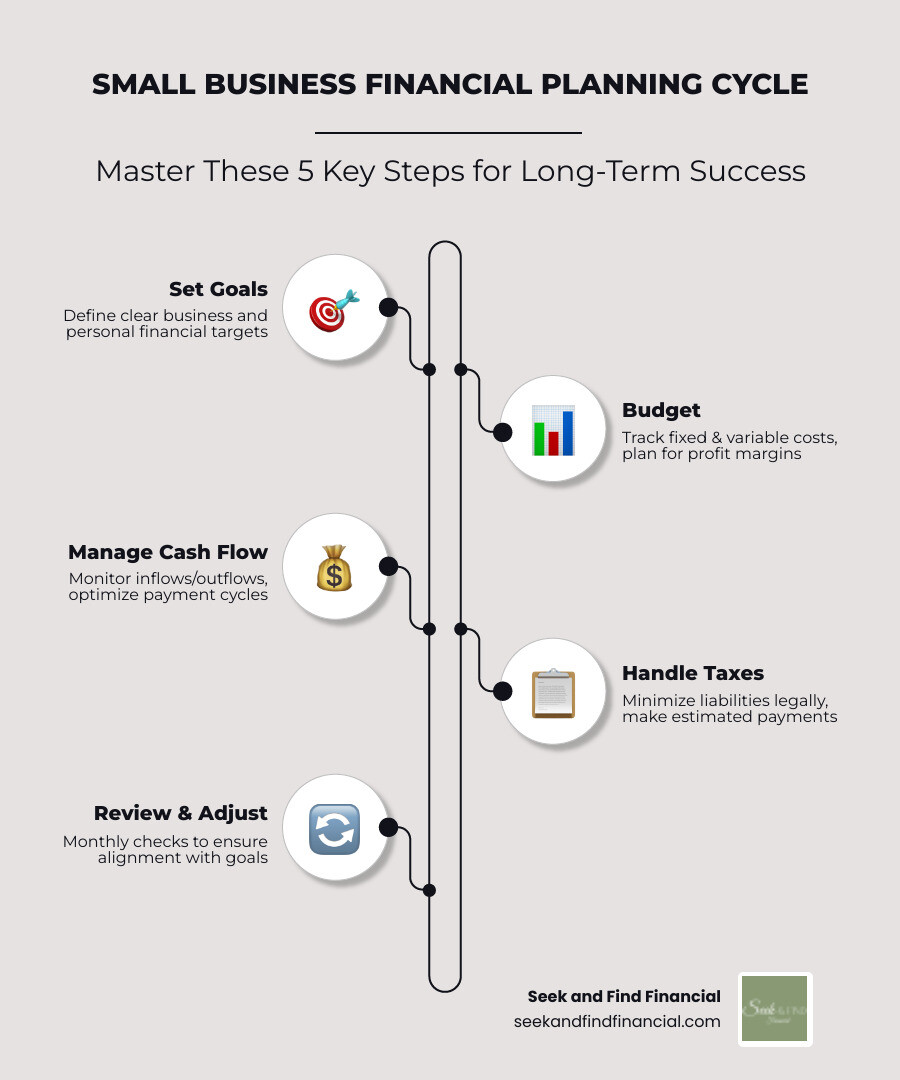
A financial plan is like a map. It shows where you are now and where you want to go. For a business owner, this is more than just a bank balance. It is a plan that connects your daily work to your future goals.

We look at small business owner financial planning as a way to get clarity. It starts with a profit statement and a balance sheet. These show what you own and what you owe. When you know these numbers, you stop guessing. You can see if you have enough to hire a new person or if you need to spend less.
A professional plan also follows high standards. We use the Terms of Use CFP Board’s Terms of Use to make sure our advice is fair. We look at your profit and how your business grows. This helps us fix small problems before they get big.
To build a business that lasts, you need a strong base. We focus on three things: budgeting, cash flow, and savings. Many business owners feel better when they have money saved.
A clear plan also helps you avoid common problems. One of the biggest is waiting too long to look at the numbers. If you only check your finances when something feels wrong, you are always reacting. That is risky.
We suggest a simple rule that is easy to follow: set aside 10% of revenue for new chances or surprises. This is not the same as your tax money. It is a buffer for the business. It can help you handle a slow month, buy equipment, or test a new idea without panic.
| Expense Type | Examples | Strategy |
|---|---|---|
| Regular bills | Rent, pay, insurance | Ask for lower rates |
| Changing costs | Shipping, ads, power | Check every month |
A good plan answers a few basic questions:
Cash flow is the lifeblood of your company. You can make a profit but still run out of cash if your customers pay late. Good cash flow management means tracking every dollar.
Here are a few practical cash flow habits that work for many owners:
We suggest using tools like QuickBooks or Xero to track your money. These tools help you send bills faster and track costs. The goal is to make sure you always have enough cash to pay your bills.
If you want a simple way to start, use a short weekly review:
A budget is not a cage. It is a tool for freedom. Many owners use a plan where every dollar has a job. Before you spend money, ask what it will get you in return.
We help you create a budget that shows all your data in one place. You should check this budget every month. Compare what you planned to spend against what you actually spent. If costs are high, you can find ways to spend less or change your prices.
A simple monthly budget check can include:
Over time, budgeting becomes less about guessing and more about setting targets, then improving them month by month.
One big mistake is mixing personal and business money. This makes tax season hard. It also makes it hard to see how well your business is doing.
We tell our clients in Valparaiso, Crown Point, and Chicago to keep separate bank accounts. This helps you build business credit. By getting a tax ID and paying bills on time, you build a history for your company. This makes it easier to get loans later.
You also need a savings fund. Try to save three to six months of business costs. This is your safety net for when things change or a machine breaks.
Tax planning is where many owners lose money. You must pay your taxes on time to avoid fees. You can find this at Tax Safe Harbor obligations. This usually means making four payments a year to the IRS.
We also look for ways to lower your bill with retirement plans. Options like a SEP IRA or a Solo 401(k) let you save large amounts of money. This also gives you a tax break. We help you pick the best plan for your goals.
You will not run your business forever. You might want to retire in Hobart or sell your company in Merrillville. You need an exit plan. This means deciding who takes over and how you get paid for your hard work.
A good exit plan starts years early. It involves finding out what the company is worth. We help you set goals for when you want to stop working. This makes sure your money is safe even after you leave.
Profit is the money left after all bills are paid at the end of the year. Cash flow is the money you have right now to pay those bills. You can have a good year but still go out of business if you cannot pay your staff today. Cash flow keeps you in business every day.
We suggest keeping three to six months of bills in a separate account. This should cover things like pay, rent, and power. Having this money reduces stress. It lets you make calm choices during a hard time.
If your business makes $400K or more, your money is likely complex. You should get help when you worry about taxes or retirement. A professional acts as your partner to help with taxes, investments, and business goals.
At Seek & Find Financial, we believe that small business owner financial planning should be simple. We help owners in Indiana and Chicago build a clear path for their wealth. We use smart tools and tax plans to help you grow without stress.
You have worked hard to build your business. Now, let’s make sure your business is working hard for your future. If you want a clear plan and a partner who knows your needs, we are here to help.
Investing involves risk, including possible loss of principal. No investment strategy can ensure financial success or guarantee against losses. Past performance may not be used to predict future results. Provided content is for overview and informational purposes only, reflect the opinions of the author, and is not intended and should not be relied upon as individualized tax, legal, fiduciary, or investment advice.
This information is being provided only as a general source of information. These views may change as market or other conditions change. This information is not intended and should not be used to provide financial advice and does not address or account for an individual’s circumstances. Past performance does not guarantee future results and no forecast should be considered a guarantee. Please seek the guidance of a financial professional regarding your particular financial concerns.
Investment advisory services offered by duly registered individuals through Seek & find Financial LLC a Registered Investment Adviser. Licensed Insurance Professional