

How to Keep Your Ship Sinking-Proof with Business Continuity Solutions
Discover business continuity solutions to mitigate risks, ensure rapid recovery & build resilience against disruptions. Start protecting now!
Imagine waking up and finding your business cannot run. Maybe a storm hit your office. Maybe a hacker locked your files. This is a real worry for many business owners. Business continuity solutions are the plans and tools that keep your business going when things go wrong.
Here is what they usually include:
The risks are high. Look at these facts:
| Statistic | Impact |
|---|---|
| 50% of companies | Have no plan for when things go wrong |
| 70% of those companies | Fail after a big problem |
| 75% of companies with a plan | Still face money problems after a delay |
Having a plan is not enough. It must be the right plan. It must be tested for real life.
For business owners making $400,000 or more, even a few days of being closed is a big deal. You lose money. You lose trust. You might even break laws. I am Daniel Delaney. I started Seek & Find Financial. I have worked in big banks and now I run my own firm. I have seen how one bad day can hurt years of hard work. That is why business continuity solutions are a key part of a smart money plan. Let us look at what you need to know.
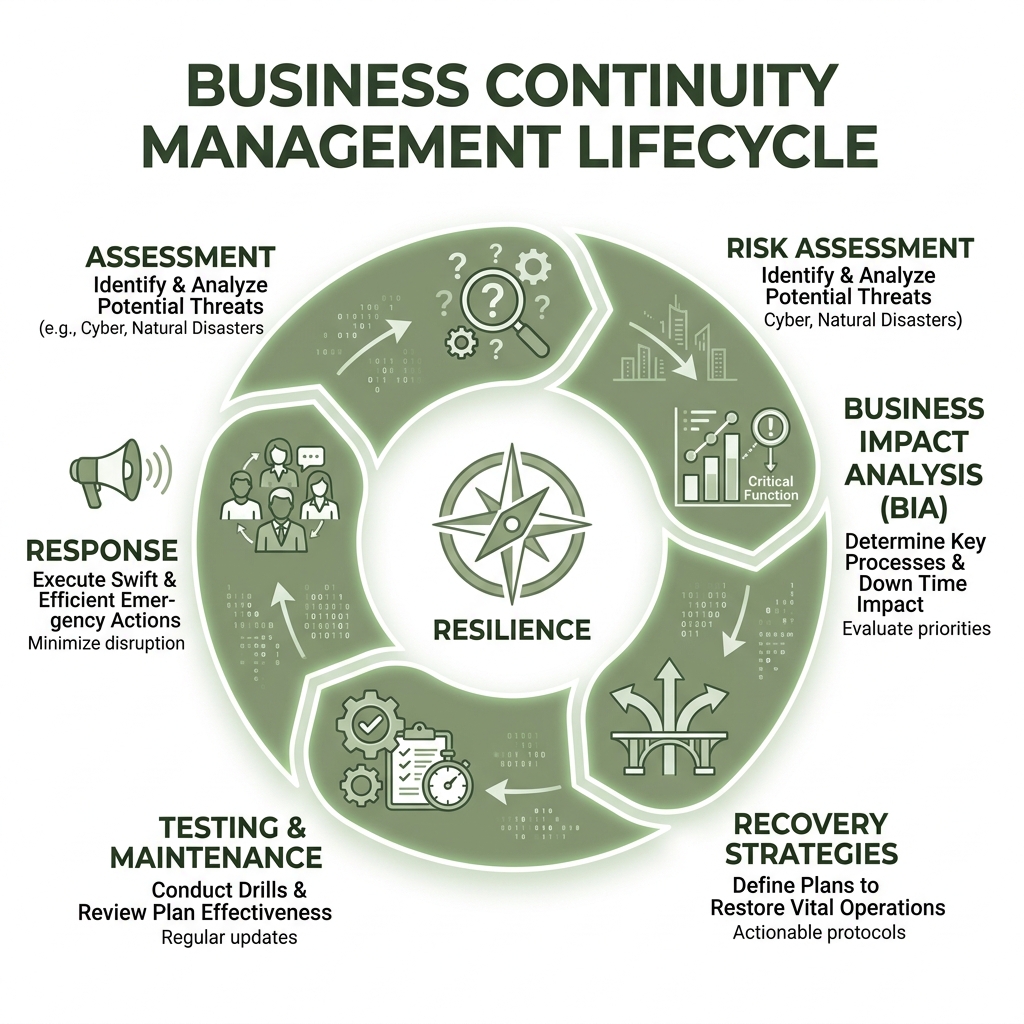
When we talk about business continuity solutions, we mean being ready. It is the ability of your company to take a hit and keep moving. It is more than just saving your files. It is making sure your team can work. It is making sure your customers get what they need. It is keeping your good name.
In places like Valparaiso or Chicago, businesses face many risks. These can be power outages or hacker attacks. Without a plan, a small problem can stop your money from coming in. Research shows that 70 percent of companies without a plan fail after a big problem. That is a scary number for any owner.
A good plan is proactive. You look at your business and ask what happens if one part stops. Then you find a way to keep it going. This is different from just fixing things after they break. As we often say, When Backup Plans Need Backup Plans it shows you are thinking ahead. You are being ready for change.
We believe expert help is important. Some experts have 60 years of experience. They help you find gaps before they cost you money. For a business owner, this is about protecting your life's work.
A good plan has a few main parts. You cannot just buy software and hope it works. You need a clear path.
First, you need a Business Impact Analysis. This means looking at every part of your business. You decide what is most important. If your email stops for an hour, is that a big deal? What if you cannot ship items for a day? This study helps you see where to spend your time and money.
Second is the Risk Assessment. This is where you look at threats from the outside. This could be a flood or a hacker. When you know what might happen, you can build better walls.
Third are the Recovery Strategies. These are the steps you take to get back to work. If your office in Merrillville is closed, where do people go? If your main computer fails, how do you switch to a backup?

When you pick tools, look at two main numbers. These are RTO and RPO.
You also need to think about the total cost. This is not just the price of the software. It includes training your staff and keeping the system running. Some new tools say they cost 50 percent less because they are more efficient.
Finally, look for rules. Many industries have standards like ISO 22301. This is a global rule for business plans. Using software that follows these rules makes it easier to pass tests. It proves to your clients that you are safe.
In the past, most businesses kept backups on big computers in their own office. Today, we have more choices. You can use the cloud or keep things on site. You can also use both. This is called a hybrid cloud.
Cloud tools are popular because they grow with you. If your business in Crown Point adds ten new people, the cloud grows too. You do not have to buy more hardware. Tools like Druva or Google Workspace help your team work from anywhere. Google even has a version that keeps your emails ready on a second system. If your main system fails, you can switch fast.
Some owners like having their own computers on site. They want to control their data. This is why many people use more than one vendor. You might use one for daily work and another for backup. If one has a problem, your whole business does not stop.
Security is also a big deal. Look for backups that cannot be changed. This means a hacker cannot delete your data. This is a great way to stop ransomware. Many new systems check everyone's ID every time they try to see data.
If you want to see how these work, you can Start Your 14-Day Trial with different providers.
Many businesses have data in different places. This happens when departments use systems that do not talk to each other. If a disaster hits, you might not see the full picture. Modern software fixes this by putting everything in one place.
Another problem is a plan that never changes. A plan from three years ago will not help with today's threats. Modern business continuity solutions use smart tech to keep plans new.
Smart tech can even run tests. It can show what happens if a supplier in Hobart goes out of business. This helps you find weak spots. Real time checks also tell you the second something looks wrong. This helps stop human mistakes.
Different businesses have different needs. A doctor in Chesterton has different worries than a shipping company in Portage.
For shipping, companies like Pitney Bowes offer special tools. They make sure your packages go out even if one site closes. They use data to see delays before they happen. This keeps your money moving.
In healthcare, the focus is on patients. These businesses must follow strict laws. Their plans must keep patient records ready even if the power goes out. Banks also have high rules. They must answer to groups like FINRA. They need systems that can show data for tests at any time.
In 2025, tech is getting even better. Here are some new features:
Tools like Castellan and Fusion are liked by many users. They help you manage your whole plan in one place.
RTO is like a clock. It measures how much time you can be down before it hurts too much. RPO is like a calendar. It measures how much data you can lose. If you save your files at 5:00 PM and the system breaks at 4:00 PM the next day, you lost 23 hours of work. If your goal was 1 hour, that is a big failure.
You should test your plan at least once a year. Many experts say you should have a meeting every three months to talk about it. This is called a tabletop exercise. If you get new tech or move offices, test the plan again right away.
The most important things are ease of use and security. You want software your team can use easily. It must be safe from hackers. Also, look at the total cost. Make sure the long term costs for storage fit your budget.
Building a strong business takes more than luck. It takes a clear plan and the right business continuity solutions. Whether you are in Hebron or Chicago, the goal is the same. You want to protect what you have built.
At Seek & Find Financial, we help business owners find clarity. We believe growing your money is not just about picking stocks. It is about building a system that lasts through storms. By using smart tech and a good plan, you can move forward with peace of mind.
If you are ready to think about your long term goals, we are here to help. You can find More info about our financial strategy to see how we help people like you build a legacy.
Investing involves risk, including possible loss of principal. No investment strategy can ensure financial success or guarantee against losses. Past performance may not be used to predict future results. Provided content is for overview and informational purposes only, reflect the opinions of the author, and is not intended and should not be relied upon as individualized tax, legal, fiduciary, or investment advice.
This information is being provided only as a general source of information. These views may change as market or other conditions change. This information is not intended and should not be used to provide financial advice and does not address or account for an individual’s circumstances. Past performance does not guarantee future results and no forecast should be considered a guarantee. Please seek the guidance of a financial professional regarding your particular financial concerns.
Investment advisory services offered by duly registered individuals through Seek & find Financial LLC a Registered Investment Adviser. Licensed Insurance Professional.