

A Comprehensive Roadmap for Preparing Your Business for Sale
Master your business sale checklist: 10 steps from preparation and valuation to closing for a smooth, profitable exit.
A business sale checklist is a structured, step-by-step guide that walks business owners through every phase of selling their company — from early preparation to final closing. If you're ready to sell, here's the core process at a glance:
Selling a business is one of the most complex financial decisions you will ever make. Research consistently shows that 70-80% of privately held businesses listed for sale fail to close within 12 months — often because sellers underestimate how much preparation is involved. For high-earning business owners, the stakes are even higher. A poorly structured sale can mean leaving hundreds of thousands of dollars on the table, or facing an unexpected tax bill that erodes years of hard work.
The good news? Sellers who follow a structured approach are far more likely to attract qualified buyers, protect confidentiality, and close on favorable terms.
I'm Daniel Delaney, Founder of Seek & Find Financial, and my background in investment planning and wealth strategy — including years advising clients through major financial transitions — gives me a practical, numbers-first perspective on using a business sale checklist to protect and grow your wealth at exit. In the sections below, I'll walk you through each stage of the process so you can approach your sale with clarity and confidence.

Investing involves risk, including possible loss of principal. No investment strategy can ensure financial success or guarantee against losses. Past performance may not be used to predict future results. Provided content is for overview and informational purposes only, reflect the opinions of the author, and is not intended and should not be relied upon as individualized tax, legal, fiduciary, or investment advice.
This information is being provided only as a general source of information. These views may change as market or other conditions change. This information is not intended and should not be used to provide financial advice and does not address or account for an individual's circumstances. Past performance does not guarantee future results and no forecast should be considered a guarantee. Please seek the guidance of a financial professional regarding your particular financial concerns.
Investment advisory services offered by duly registered individuals through Seek & Find Financial LLC a Registered Investment Adviser. Licensed Insurance Professional.
Quick Business sale checklist definitions:
Preparation is the most important part of our business sale checklist. Think of it like detailing a car before you sell it. You want everything to look perfect. In the business world, "perfect" means organized and independent.
First, we need to look at your books. Buyers want to see at least three to five years of clean financial statements. This includes your profit and loss statements, balance sheets, and tax returns. If your bookkeeping is messy, it creates doubt. Doubt leads to lower offers or deals falling through. We recommend working with your accountant to "normalize" these records. This means adding back one-time expenses or owner-specific perks to show the true earning power of the company.

Next, we look at your operations. A common trap for entrepreneurs in areas like Merrillville or Crown Point is being too involved in the day-to-day. If the business can't run without you, it isn't worth as much. To fix this, you should document your Standard Operating Procedures (SOPs). This creates a "turn-key" operation. When a buyer sees that you have a manual for everything from hiring to inventory, they feel more confident.
Reducing owner dependency is a key value driver. If you can take a two-week vacation and the business thrives, you have a valuable asset. For more details on this phase, see our guide on how to prepare business for sale.
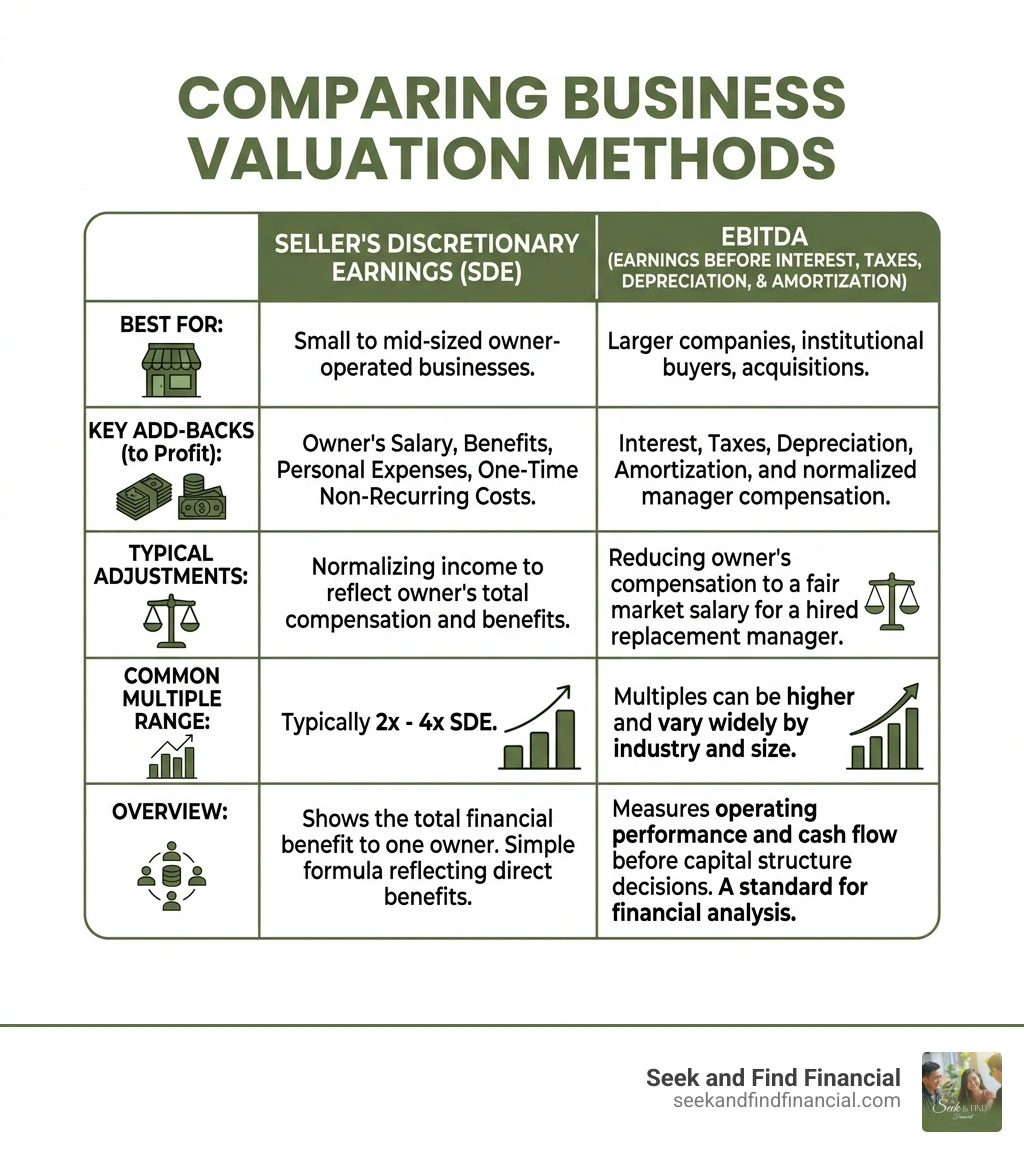
How much is your hard work actually worth? This is where the math gets serious. Most small to mid-sized businesses are valued using a multiple of their earnings.
There are two main ways to measure those earnings:
Small businesses typically sell for a multiple of 2 to 4 times their SDE. However, this can change based on your industry and how fast you are growing.
You shouldn't try to do this alone. You need an advisory team. This team should include:
Choosing the right broker is vital. Ask them how many businesses they have sold in the last two years and what their buyer database looks like. A good broker will help you follow a Selling a Business Checklist to Ensure a Smooth Sale to avoid common mistakes.
Once your business is ready and valued, it is time to go to market. This is a sensitive time. You want people to know the business is for sale, but you don't want your employees or competitors to find out too early.
We use a Confidential Information Memorandum (CIM). This is a detailed book about your company. Before anyone sees it, they must sign a Non-Disclosure Agreement (NDA). We also use "blind listings" that describe the business without giving away the name or exact location.
Marketing starts with a "teaser." This is a one-page document that gives the highlights of the business. We target strategic buyers—people who already own a similar business—and financial buyers. Using a broker’s buyer database can speed this up. The goal of your marketing plan is to create competition. When multiple buyers are interested, you get better terms.
When a buyer is serious, they will send a Letter of Intent (LOI). This is a big moment, but the price isn't the only thing that matters. You need to look at the "deal structure."
After the LOI is signed, the buyer gets to "look under the hood." This is called due diligence. They will verify everything you told them.
To make this easy, we suggest setting up a virtual data room. This is a secure online folder where you keep all your documents. The buyer will check your contracts, employee records, and tax compliance. If you have followed your business sale checklist and kept clean records, this part should go smoothly.
Once the buyer is satisfied, your attorney will draft the final purchase agreement and bill of sale. One important step here is filling out IRS Form 8594. Both you and the buyer must agree on how the purchase price is divided between assets like equipment and "goodwill." For a detailed look at the final steps, check out this Selling Your Business: Checklist for a Smooth Closing.
The sale is closed, but your work isn't quite done. Most buyers will want you to stay on for a few months to train them. This ensures the customers and employees stay happy.
From a wealth perspective, this is when you need to manage your "liquidity event." You will likely owe capital gains taxes. We work with our clients to find ways to minimize this, such as using installment sales or diversifying wealth into other investments.
Selling your business is a great way to fund your retirement, but you need a plan for what comes next. Transitioning from "business owner" to "investor" requires a mindset shift. You can learn more about this in our guide on exit planning for entrepreneurs.
In the current April 2026 market, it typically takes six to twelve months to sell a business. Some deals happen faster if the business is very clean, while complex companies can take over a year. Factors like your industry, the economy, and how well you prepared your business sale checklist will influence the timing.
Tax strategy is huge. If you use an installment sale, you receive payments over several years, which might keep you in a lower tax bracket. The way you allocate the purchase price between assets and goodwill also changes your tax bill. Always consult with a tax professional before signing the final papers.
While you can sell a business yourself, we usually don't recommend it for businesses earning over $400K. Brokers bring a database of qualified buyers and handle the awkward negotiations. They usually charge a commission only when the business sells. Their ability to maintain confidentiality and vet buyers often pays for itself.
Selling your business is a journey, not a single event. By using a structured business sale checklist, you take the emotion out of the process and focus on the facts. This leads to higher valuations and a smoother exit.
At Seek & Find Financial, we specialize in helping business owners in Indiana and Illinois navigate these big life changes. We don't just look at the sale; we look at your whole financial life to ensure you are set up for long-term growth. If you are ready to start planning your exit, we invite you to start your business sale advisory today.
Investing involves risk, including possible loss of principal. No investment strategy can ensure financial success or guarantee against losses. Past performance may not be used to predict future results. Provided content is for overview and informational purposes only, reflect the opinions of the author, and is not intended and should not be relied upon as individualized tax, legal, fiduciary, or investment advice.
This information is being provided only as a general source of information. These views may change as market or other conditions change. This information is not intended and should not be used to provide financial advice and does not address or account for an individual’s circumstances. Past performance does not guarantee future results and no forecast should be considered a guarantee. Please seek the guidance of a financial professional regarding your particular financial concerns.
Investment advisory services offered by duly registered individuals through Seek & find Financial LLC a Registered Investment Adviser. Licensed Insurance Professional