

Demystifying the Meaning of Working Capital in Financial Management
Learn how working capital management and finance impacts cash flow, liquidity, and growth in this essential business guide.
Working capital management and finance sits at the heart of every business that wants to stay solvent, grow confidently, and avoid cash crunches that can derail even strong revenue years.
Here is a quick breakdown of what it means and why it matters:
| Concept | What It Means |
|---|---|
| Working Capital | Current assets minus current liabilities |
| Purpose | Measures your ability to cover short-term obligations |
| Key Components | Cash, accounts receivable, inventory, accounts payable |
| Why It Matters | Keeps daily operations running without interruption |
| Common Risk | High revenue but still running out of cash |
Many high-earning business owners assume strong sales mean strong cash flow. They don't always go hand in hand. A business can be profitable on paper and still struggle to pay suppliers, cover payroll, or fund its next growth move, all because working capital is poorly managed.
This guide breaks down working capital from the ground up. You will learn how to calculate it, how to read the warning signs, and how to use it as a strategic tool, not just a bookkeeping figure.
I'm Daniel Delaney, Founder of Seek & Find Financial, and my career in financial services, from Riverstone Financial Advisors to launching my own independent advisory firm, has shown me how misunderstood working capital management and finance can be, even among high earners running complex businesses. In the sections ahead, we will build a clear, practical framework you can apply directly to your financial strategy.
Investing involves risk, including possible loss of principal. No investment strategy can ensure financial success or guarantee against losses. Past performance may not be used to predict future results. Provided content is for overview and informational purposes only, reflect the opinions of the author, and is not intended and should not be relied upon as individualized tax, legal, fiduciary, or investment advice.
This information is being provided only as a general source of information. These views may change as market or other conditions change. This information is not intended and should not be used to provide financial advice and does not address or account for an individual's circumstances. Past performance does not guarantee future results and no forecast should be considered a guarantee. Please seek the guidance of a financial professional regarding your particular financial concerns.
Investment advisory services offered by duly registered individuals through Seek & Find Financial LLC a Registered Investment Adviser. Licensed Insurance Professional
Working capital management and finance vocab explained:
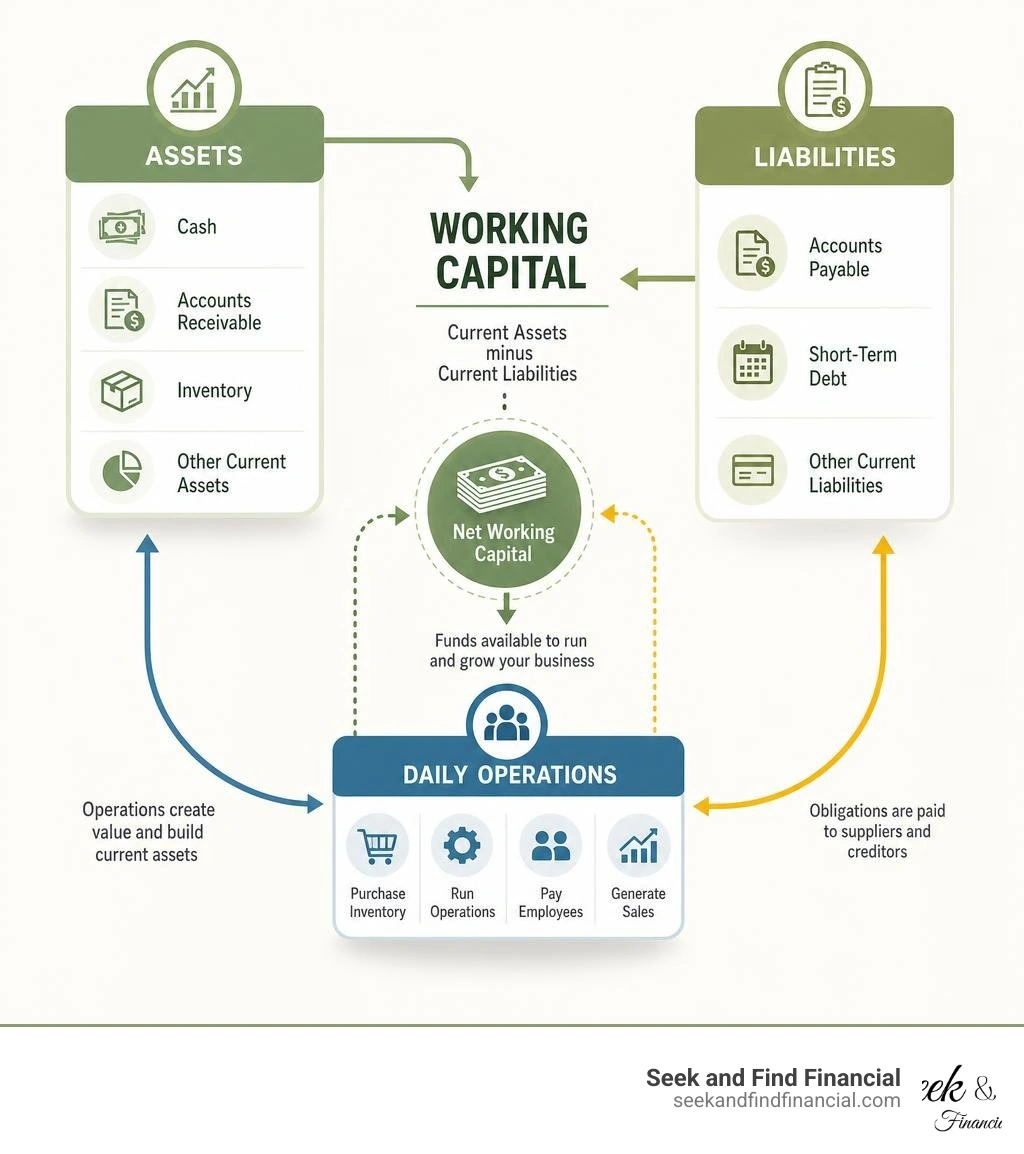
Working capital is the money your business has available for its daily operations. It is not your long-term wealth. It is not the value of your office building or your heavy machinery. Instead, working capital represents your liquid funds. It is the money you use to buy raw materials, pay your utility bills, and meet your weekly payroll.
To understand why this matters, we must look at the difference between current assets and current liabilities. Current assets are things of value that you expect to turn into cash within one year. Current liabilities are the debts and bills that you must pay within that same one-year window.
When we look at operational liquidity, we are asking a simple question: can your business pay its bills on time? Many business owners focus only on sales and profit margins. However, a business can have high profits on paper but still run out of cash. This happens because cash flow does not always match your sales schedule.
For example, you might sell a large order of goods today. Your profit margin looks great. But if your customer has sixty days to pay you, you cannot use that profit to pay your employees tomorrow. Understanding the importance of working capital management in small business helps you avoid these dangerous gaps. It ensures that your business always has the cash flow needed to keep the doors open.
To manage your working capital well, you must understand its five core parts. These parts work together like gears in a machine.
When you balance these five parts, you achieve smooth operations. If even one part gets out of line, your entire cash flow can stall.
Calculating your working capital is simple. You do not need complex math. You only need to look at your balance sheet. The standard working capital formula is:
Net Working Capital = Current Assets - Current Liabilities
To get an accurate picture, you must list all of your short-term assets and subtract all of your short-term liabilities. You can learn more about this math by reading this guide on What is Working Capital? Formula & How to Calculate It.
Once you run this calculation, you will have either a positive or a negative number. Both numbers tell a very different story about your business health.
| Positive Working Capital | Negative Working Capital |
|---|---|
| Current assets are greater than current liabilities. | Current liabilities are greater than current assets. |
| You have enough cash and short-term assets to pay your upcoming bills. | You may struggle to pay your immediate bills on time. |
| You can invest in new opportunities and grow your business. | You might have to take on expensive short-term debt to cover basic costs. |
| This shows safety, but too much positive capital can mean idle cash is being wasted. | This shows high risk, though some fast-cash businesses can manage it. |
It sounds strange, but rapid expansion is one of the most common causes of business failure. When a business grows very fast, it needs more inventory, more staff, and more space. All of these things require immediate cash.
If you win a massive new contract, you might need to buy $100,000 of raw materials today and hire three new workers. You must pay for these materials and wages now. However, your new customer might not pay you for ninety days. This creates a severe cash shortage.
This problem is known as overtrading. It means you are taking on more business than your working capital can support. If you want to scale your business safely without running out of money, you should review our Blog/Financial Planning Business Growth Guide 2026. It offers a clear roadmap for matching your growth speed with your financial capacity.
To get a deeper look at your business health, you should use liquidity metrics. These ratios help you compare your business to industry standards and track your progress over time. You can read more about how these ratios fit into broader business strategies in this guide on Working Capital Management: Ensuring Cash Flow & Efficiency.
The two most common ratios are the current ratio and the quick ratio.
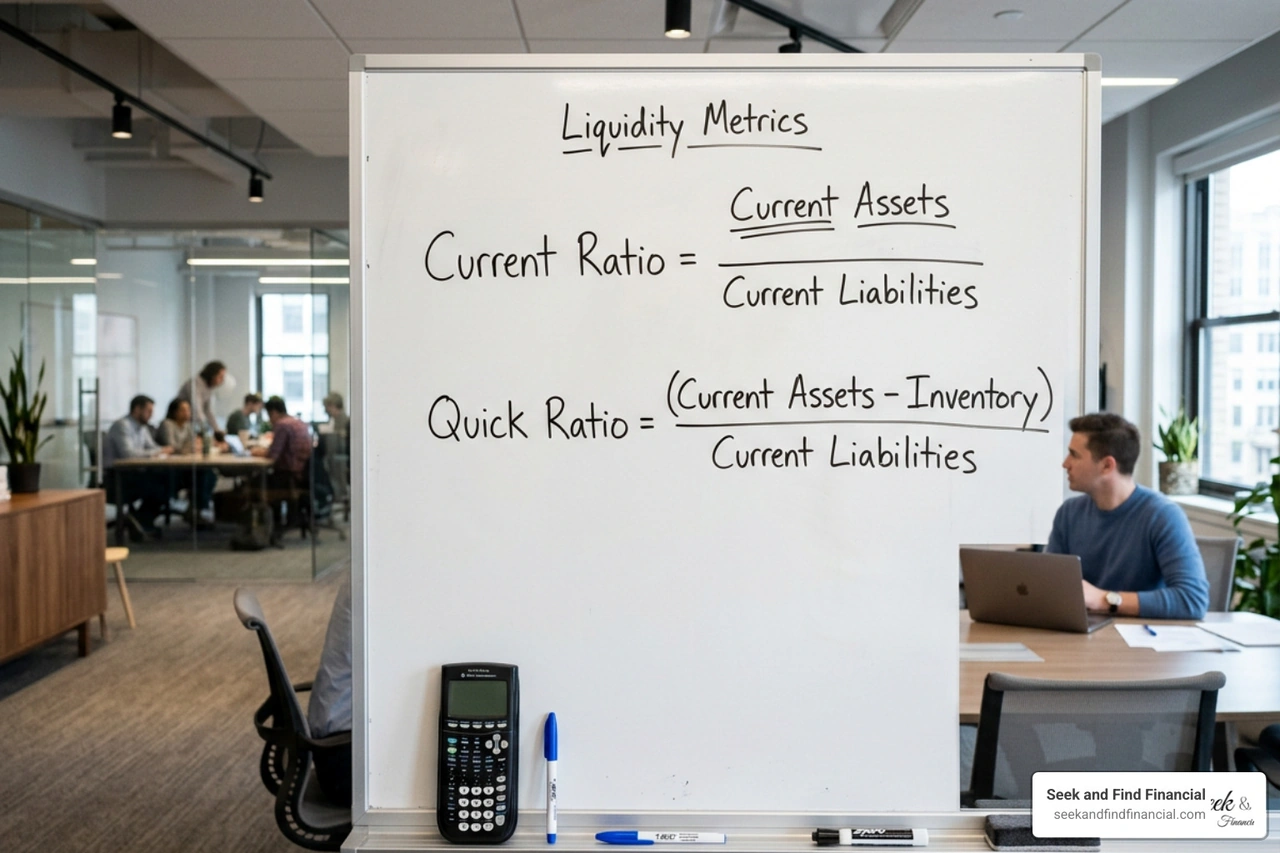
The current ratio measures your total current assets against your total current liabilities. It shows if you have enough short-term resources to cover your short-term debts.
The quick ratio is a more conservative test. It is also called the acid-test ratio. It removes inventory from your current assets before dividing by current liabilities. Why? Because inventory can take a long time to sell. The quick ratio only looks at the assets you can turn into cash almost instantly, like actual cash and accounts receivable.
The Cash Conversion Cycle (CCC) is a metric that tracks time. It measures how many days it takes for a dollar spent on raw materials to travel through your business and come back into your bank account as cash from a sale.
To find your CCC, you must understand three separate time measurements:
The formula to find your cycle is:
CCC = DIO + DSO - DPO
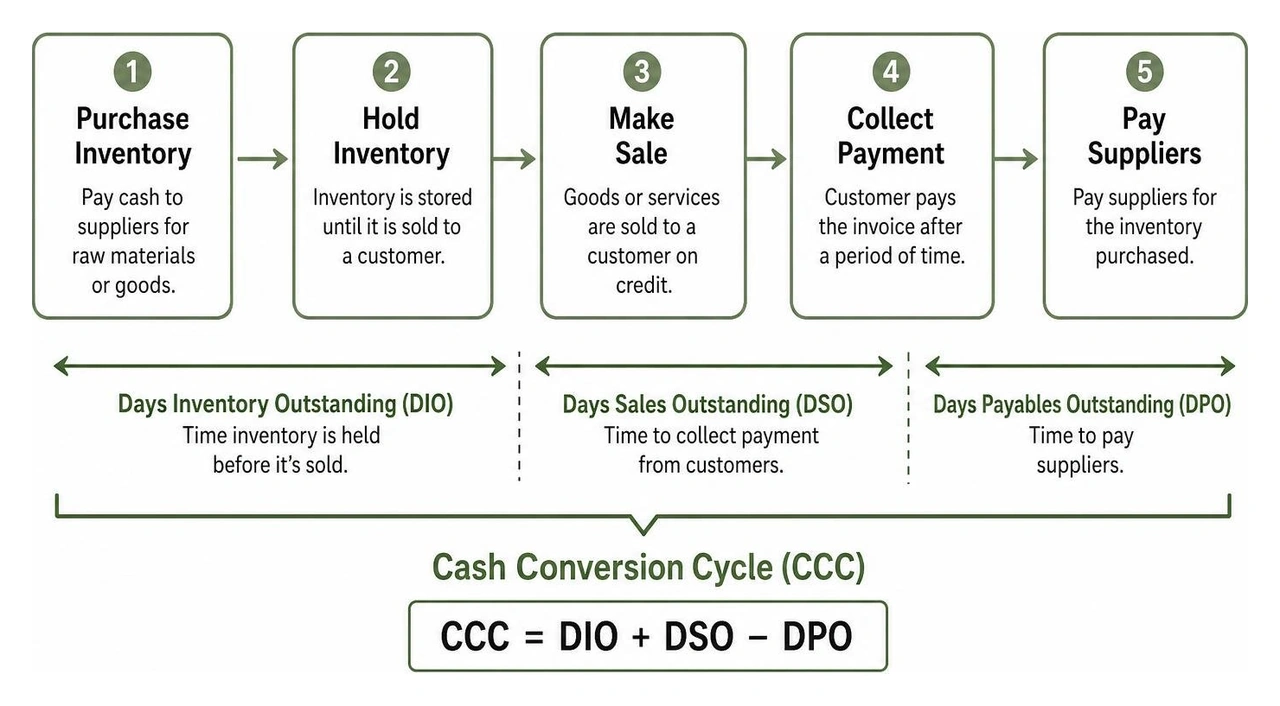
Your goal is to make this cycle as short as possible. A shorter cycle means your cash is not trapped. It frees up your cash flow, which gives you more money to reinvest in your business or build your personal wealth.
Managing working capital is always a balancing act. On one hand, you want plenty of liquidity so you never have to worry about paying your bills. On the other hand, holding too much idle cash hurts your profitability.
Idle cash sitting in a basic business checking account does not earn a return. It loses value over time due to inflation. This is the opportunity cost of safety. If you keep $500,000 in cash just to feel safe, you are missing out on the returns you could get by investing that money back into your business or into a diversified portfolio.
Risk management is about finding the sweet spot. You need enough cash to handle emergencies, but not so much that you waste your wealth-building potential. To learn how to strike this balance in your daily operations, you can read our guide on how to manage working capital.
When you manage your capital, you must avoid two dangerous extremes:
We work with business owners in places like Valparaiso, Chesterton, and Chicago to help them find their ideal capital structure. We want your business to be safe, but we also want your money working hard for your long-term future.
Optimizing your working capital does not mean you have to work longer hours. It means you need to put better systems in place.
First, focus on inventory management. Do not let finished goods sit in your warehouse gathering dust. Use just-in-time inventory practices where possible, and run regular audits to identify slow-moving items.
Second, look at accounts receivable automation. Sending invoices late or failing to follow up on late payments ruins your cash flow. Modern software can send invoices instantly and email automatic reminders to your clients.
Third, negotiate better accounts payable terms. Ask your suppliers for longer payment windows, or look for discounts if you pay early.
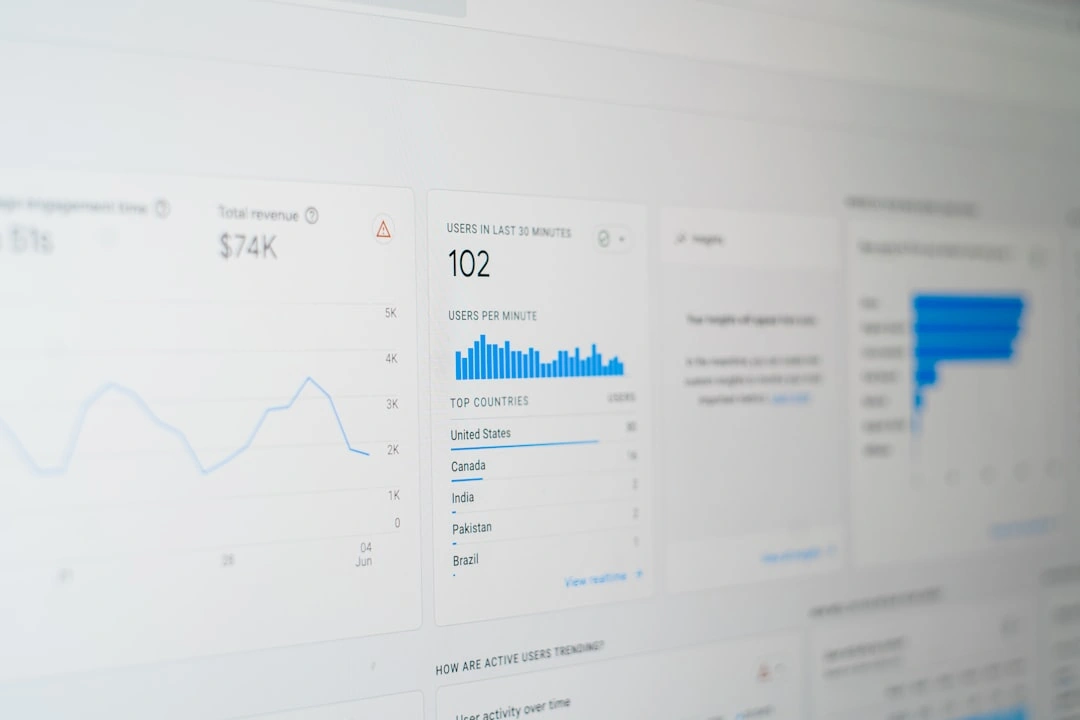
Technology has changed how we manage business funds. Today, we can use advanced tools to make smarter decisions.
According to the Working Capital Study 23/24, businesses that adopt these modern digital tools see major improvements in their cash cycles. If you want to see how these tech strategies can fit into your business plans this year, take a look at our Blog/Working Capital Management Guide 2026.
Yes, but only under specific conditions. Some businesses use deferred revenue or subscription models where customers pay upfront before receiving the service. Software-as-a-Service (SaaS) companies often operate this way. Because they collect cash before they incur the cost of delivering the service, they can run safely with negative working capital. However, for traditional businesses like manufacturing or retail, negative working capital is usually a sign of severe financial distress.
A standard rule of thumb is a current ratio between 1.5 and 2.0. This means you have $1.50 to $2.00 of current assets for every $1.00 of current liabilities. However, the ideal ratio depends heavily on your industry. You should look at industry benchmarks to see what is normal for your specific field. The goal is to build a liquidity safety net that allows you to meet your short-term obligations without leaving too much cash idle.
Inflation increases your working capital needs. As the cost of raw materials, rent, and labor rises, you will need more cash just to maintain your current level of operations. Your inventory value will go up, and your accounts receivable balances will grow. If you do not increase your cash reserves to match these rising costs, your cash purchasing power will shrink, leaving your business vulnerable to cash shortages.
Managing your working capital is not just about keeping the lights on today. It is about building a strong foundation so you can grow your personal wealth over time. When your business has a healthy cash flow, you have the freedom to make long-term strategic choices rather than reacting to short-term emergencies.
At Seek & Find Financial, we specialize in helping entrepreneurs and business owners in Valparaiso, Crown Point, Chicago, and surrounding areas turn their business success into lasting personal wealth. We design a personalized wealth strategy and tax planning system tailored to your unique life.
To learn more about how we can help you align your business success with your personal financial goals, read our guide on Blog/Business Capital Management.
We can help you build a clear financial roadmap that connects your business cash flow to your long-term retirement and investment plans. Reach out to us today to start building a strategy that works for you.
Investing involves risk, including possible loss of principal. No investment strategy can ensure financial success or guarantee against losses. Past performance may not be used to predict future results. Provided content is for overview and informational purposes only, reflect the opinions of the author, and is not intended and should not be relied upon as individualized tax, legal, fiduciary, or investment advice.
This information is being provided only as a general source of information. These views may change as market or other conditions change. This information is not intended and should not be used to provide financial advice and does not address or account for an individual’s circumstances. Past performance does not guarantee future results and no forecast should be considered a guarantee. Please seek the guidance of a financial professional regarding your particular financial concerns.
Investment advisory services offered by duly registered individuals through Seek & find Financial LLC a Registered Investment Adviser. Licensed Insurance Professional